Kwila Decking vs Composite Decking Cost per Square Metre NZ
Kwila Decking vs Composite Decking Cost per Square Metre NZ: A Comprehensive Financial and Technical Guide
Building an outdoor deck is one of the most popular home improvement projects across New Zealand, expanding indoor-outdoor flow and adding long-term property value. When selecting surface decking materials, Kiwis predominantly choose between traditional Kwila (Merbau) hardwood timber and modern engineered composite decking boards. Evaluating a Kwila decking vs composite decking cost per square metre NZ decision requires examining material board supply prices, substructure timber requirements, stainless steel fasteners, trade labor fees, and long-term maintenance cycles under New Zealand’s high-UV and coastal climate conditions.
This educational guide provides an objective, data-driven analysis of initial material pricing, professional installation labor rates, maintenance expenses, and total lifecycle costs across New Zealand regional markets. Readers will explore the material performance of Kwila and composite decking, examine practical installation scenarios, analyze detailed budgeting models, and learn critical building code practices required under the New Zealand Building Code.
Overview of Kwila Decking vs Composite Decking Cost per Square Metre NZ

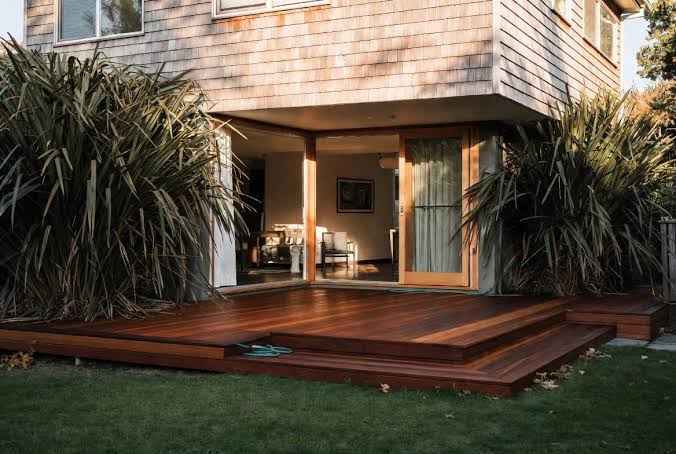
Analyzing Kwila decking vs composite decking cost per square metre NZ metrics requires separating raw board supply pricing from total installed project costs. Kwila (Intsia bijuga) is a dense, naturally oily tropical hardwood imported primarily from certified sources in Southeast Asia and Papua New Guinea. Kwila decking boards generally range from $90 to $130 NZD per square meter for materials alone. When combined with H3.2 treated pine joists, concrete footings, 316 stainless steel screws, initial tannin cleaning, and licensed builder labor, total installed project costs range between $550 and $900 NZD per square meter across New Zealand regions.
Upfront Board Supply Cost (Surface Material Only)
├── Kwila Hardwood Timber (140x19mm / 90x19mm): $90 – $130 NZD / m²
└── Capped Composite Decking: $100 – $220 NZD / m²

Total Turnkey Installed Project Cost (Framing, Fasteners, Labor & Boards)
├── Kwila Hardwood Deck: $550 – $900 NZD / m²
└── Capped Composite Deck: $550 – $950+ NZD / m² (up to $1,100+/m² for premium cellular/molded lines)
Composite decking—manufactured from a blend of recycled wood flour and high-density polyethylene or capping polymers—carries a material supply range of $100 to $220 NZD per square meter. Installed composite deck projects range from $550 to $950+ NZD per square meter (and up to $1,100+ NZD per square meter for premium capped cellular PVC or molded polyurethane boards). Over a 15-to-20-year lifecycle, the initial cost differential narrows significantly. Kwila requires chemical washing and oiling every 12 to 18 months to manage its dark tannin bleeding and prevent UV silvering, whereas composite decking requires simple periodic washing with detergent and carries 25-to-30-year manufacturer stain-and-fade warranties.
Primary Decking Categories and Material Tiers
Selecting outdoor decking surface materials involves evaluating wood grain authenticity, density, surface capping technology, and maintenance requirements.
| Category / Type | Description | Common Use Case | Estimated Cost & Effort Level |
| Kiln-Dried FSC Kwila (140x19mm Smooth) | Solid tropical hardwood with high natural oil density; Grade 1 durability; rich reddish-brown tone. | Standard residential decks, traditional pergolas, high-traffic family outdoor areas. | Low-Moderate Initial Cost / High Maintenance ($90–$130/m² boards; $550–$900/m² installed) |
| Kwila Griptread Profile (140x19mm / 90x19mm) | Hardwood boards featuring factory-milled non-slip face grooves on one side. | Commercial walkways, sloped access ramps, and damp shaded residential areas. | Moderate Initial Cost / High Maintenance ($95–$135/m² boards; $580–$920/m² installed) |
| First-Generation Uncapped Composite | Basic wood-plastic composite without a protective outer polymer cap layer; susceptible to oil stains. | Utility platforms, shaded secondary boardwalks, or low-exposure residential decks. | Moderate Cost / Moderate Maintenance ($100–$140/m² boards; $550–$700/m² installed) |
| Capped Wood-Plastic Composite (Capped WPC) | Composite core encased in an engineered polymer shell that resists water, stains, and UV rays. | High-traffic residential decks, outdoor entertainment zones, and pool surrounds. | Moderate-High Cost / Low Maintenance ($140–$220/m² boards; $650–$950/m² installed) |
| Mineral-Filled / Cellular PVC Composite | Synthetic decking containing zero wood flour; completely immune to water absorption and rot. | Oceanfront properties, marine docks, shaded damp courtyards, and wet pool margins. | High Cost / Very Low Maintenance ($220–$320/m² boards; $850–$1,100+/m² installed) |
Choosing Between Options
Deciding among these material options depends on budget constraints, maintenance willingness, and site conditions. Kwila hardwood suits property owners who appreciate natural timber warmth, rich reddish tones, and a lower initial purchase price, and who are willing to perform periodic cleaning and oiling. Capped composite or cellular PVC materials suit homeowners seeking low long-term maintenance, uniform color retention, hidden fastener finishes, and zero timber splinters around swimming pools or bare feet.
Practical Installation Scenarios
Scenario 1: Ground-Level Backyard Deck in Suburban Auckland (20 sq m)
A homeowner constructs a 20-square-meter ground-level entertaining deck connected to an existing rear lounge in Climate Zone 1.
-
Implementation Steps & Components:
-
Excavating topsoil and placing H4 treated timber posts into concrete footings.
-
Framing the substructure using H3.2 treated pine 90x45mm joists spaced at 450mm centers.
-
Laying 140x19mm Kiln-Dried Kwila boards, pre-drilling and countersinking 10-gauge 316 marine-grade stainless steel screws.
-
Washing the deck with a specialized sodium percarbonate timber cleaner to strip natural bleeding tannins after 6 to 8 weeks of initial weathering.
-
Applying two coats of penetrating Kwila deck oil.
-
-
Relevance: Represents a classic Kiwi suburban installation. Using standard Kwila boards keeps initial material supply costs manageable, though low ground clearance requires adequate subfloor ventilation (minimum 150mm) to prevent board cupping. Total installed cost: $550 to $750 per m² ($11,000 to $15,000 total NZD).
Scenario 2: Coastal Elevated Deck in Tauranga / Coromandel (30 sq m)
A 30-square-meter elevated deck overlooking a coastal bay exposed to high UV radiation and salt air.
-
Implementation Steps & Components:
-
Framing the substructure with H3.2 treated pine joists and applying continuous butyl joist flashing tape along all top edges.
-
Installing 138x23mm capped wood-plastic composite boards using a 316 stainless steel hidden clip fastening system.
-
Leaving 6mm thermal expansion gaps at board butt joints to account for temperature shifts.
-
Installing matching composite fascia boards to enclose the subframe perimeter.
-
-
Relevance: Highlights a moisture-heavy, high-UV coastal environment. Salt air and rain cause Kwila tannins to bleed rapidly, potentially staining nearby concrete or plaster cladding; capped composite eliminates tannin runoff and resists coastal salt air without rotting. Total installed cost: $700 to $950 per m² ($21,000 to $28,500 total NZD).
Scenario 3: High-UV Deck with Pool Surround in Christchurch (35 sq m)
A 35-square-meter deck built around an in-ground swimming pool in Canterbury.
-
Implementation Steps & Components:
-
Constructing an H3.2 timber subframe with stainless steel joist hangers and post stirrups.
-
Selecting light-colored capped cellular PVC composite boards engineered with solar-reflective technology.
-
Fastening boards with hidden side-groove clips and color-matched edge plugs.
-
Installing a glass balustrade anchored into structural double joists to meet safety codes for pool fencing.
-
-
Relevance: Demonstrates a barefoot pool environment. Uncoated timber near pool water absorbs moisture and can release splinters, whereas capped PVC composite provides a smooth, splinter-free, slip-resistant surface. Total installed cost: $850 to $1,100 per m² ($29,750 to $38,500 total NZD).
Comparative Scenario Analysis
Scenario 1 minimizes initial capital investment by utilizing standard timber framing and Kwila surface boards, but commits the homeowner to periodic cleaning and oiling cycles. Scenario 2 trades a higher initial material investment for long-term resistance to coastal salt air, zero tannin leaching, and a clean hidden clip appearance. Scenario 3 leverages cellular PVC’s moisture resistance around swimming pools, eliminating splinters and providing high durability in intense sun conditions.
Planning, Capital Budgeting, and Lifecycle Cost Considerations
Evaluating Kwila decking vs composite decking cost per square metre NZ models requires analyzing upfront construction fees alongside 15-year cumulative maintenance expenses. The sample plan below outlines estimated expenses for a standard 20-square-meter deck.
| Budget Line Item | Kwila Hardwood Deck (20 m²) | Capped Composite Deck (20 m²) | Cost Drivers & Explanation |
| Substructure Framing & Footings | $1,200 – $2,000 | $1,200 – $2,000 | H3.2 treated pine joists, post stirrups, concrete footings ($60–$100/m²). |
| Joist Protection Tape | Optional ($0 – $120) | Recommended ($150 – $250) | Butyl joist flashing tape protects joists under non-breathable boards. |
| Surface Decking Boards | $1,800 – $2,600 ($90–$130/m²) | $2,800 – $4,400 ($140–$220/m²) | Raw timber board volume vs engineered composite capping technology. |
| Fasteners & Fixing Hardware | $200 – $400 (316 Stainless screws) | $450 – $850 (Hidden clips/screws) | Face-screwing stainless steel vs engineered hidden clip systems. |
| Installation Trade Labor | $7,000 – $10,000 ($350–$500/m²) | $6,000 – $9,000 ($300–$450/m²) | Licensed builder fees; Kwila requires full pre-drilling and countersinking. |
| Initial Tannin Cleaning & Oiling | $300 – $500 | Not required ($0) | Chemical tannin stripper, wood brightener, and oil applicator kit. |
| Gross Upfront Installed Cost | $10,500 – $15,900 ($525–$795/m²) | $10,600 – $16,500 ($530–$825/m²) | Initial capital required before long-term maintenance cycles. |
| Estimated 15-Year Maintenance | $3,000 – $5,000 | $300 – $600 | Annual/bi-annual oiling and washing vs periodic soap-and-water wash. |
| Cumulative 15-Year Total Cost | $13,500 – $20,900 | $10,900 – $17,100 | Long-term financial parity horizon between materials. |
Note: All monetary figures listed represent New Zealand market baseline estimates in NZD incl. GST. Actual project totals fluctuate based on regional trade labor rates, site access complexity, deck height, and council permit fees.
Strategies, Tools, and Support Options
Navigating material selection and installation requires utilizing appropriate tools, structural accessories, and building code frameworks.
-
Butyl Joist Flashing Tape: Self-adhering waterproof tape applied to the top face of wooden joists before board installation.
-
Advantages: Seals around screw penetrations and prevents standing water from rotting joists under composite boards.
-
Disadvantages: Adds minor material cost ($5 to $8 per linear meter) and prep time.
-
-
Hidden Fastener Clip Systems: Engineered plastic or stainless steel clips inserted into side-grooved composite boards.
-
Advantages: Provides a clean surface free of visible screw heads; automatically sets precise 5mm or 6mm board gaps.
-
Disadvantages: Higher hardware cost than standard timber screws; can complicate individual board replacement.
-
-
Chemical Tannin Strippers and Wood Brighteners: Specialized oxalic acid and sodium percarbonate cleaning solutions formulated to extract natural water-soluble tannins from raw Kwila.
-
Advantages: Accelerates the initial weathering process from 12 weeks down to several days.
-
Disadvantages: Requires chemical safety equipment and thorough water rinsing that can stain adjacent masonry if uncontained.
-
-
New Zealand Building Code Schedule 1 Exemptions: Guidelines under the Building Act 2004 defining deck construction exemptions.
-
Advantages: Decks where the fall height does not exceed 1.5 meters from ground level generally do not require building consent, lowering administrative overhead.
-
Disadvantages: Decks exceeding 1.5 meters require formal council building consent and engineering Producer Statements (PS1).
-
Safety Hazards, Structural Risks, and Common Mistakes
Installing Kwila or composite decking involves managing environmental exposure, thermal movement, chemical leaching, and regulatory compliance.
-
Tannin Leaching and Property Staining (Kwila): Kwila contains rich natural tannins that bleed dark red-brown water when exposed to rain or hosing. If uncontained, leaching tannins permanently stain light-colored concrete, limestone paving, and house plaster cladding. Mitigation: Weather or chemically wash Kwila boards in a grassed area before fixing, or install protective drop sheets over porous surfaces.
-
Thermal Heat Retention under Direct Sun (Composite): Synthetic composite boards—particularly dark charcoal or brown shades—absorb and retain more radiant solar heat than natural Kwila timber during hot summer days, making bare-foot walking uncomfortable. Mitigation: Select light-colored composite boards with solar-reflective heat technology or install overhead shade structures.
-
Inadequate Subfloor Ventilation and Ground Clearance: Insufficient ground clearance (under 150mm) without cross-ventilation traps soil moisture. This causes Kwila boards to cup and warp, while causing subframe joists under composite decks to rot prematurely. Mitigation: Maintain minimum clearance heights and install perimeter ventilation grilles.
-
Ignoring Longitudinal Thermal Expansion (Composite): Unlike timber, which shrinks and swells primarily in width across humidity changes, plastic composite boards expand and contract in length along temperature changes. Butt-jointing composite boards tightly against house walls or end-to-end causes boards to buckle during hot weather. Mitigation: Follow manufacturer end-to-end expansion gap charts strictly during installation.
-
Incorrect Joist Spacing for Composite Boards: Installing composite boards on joists spaced at 500mm or 600mm centers (standard for thick hardwood) causes synthetic boards to sag under foot traffic. Mitigation: Restrict joist spacing to a maximum of 400mm or 450mm centers for residential composite applications (or 300mm for commercial or diagonal layouts).
Maintenance, Best Practices, and Long-Term Management
Preserving structural safety, visual appearance, and slip resistance requires simple, disciplined preventative care adapted to the chosen material.
Ongoing Preventative Maintenance Checklist
-
Kwila Timber Maintenance (Every 12 to 18 Months):
-
Scrub the surface with a stiff-bristled broom and specialized timber cleaner to remove dirt, grease, and mold spores.
-
Allow timber to dry completely for 24 to 48 hours.
-
Apply two thin coats of penetrating oil- or water-based Kwila deck oil, maintaining a wet edge to avoid lap marks.
-
-
Composite Decking Maintenance (Every 3 to 6 Months):
-
Sweep away leaves, dirt, and organic debris from board gaps using a soft broom to maintain subfloor airflow.
-
Wash boards with warm water, mild dish soap, and a soft synthetic brush to break down oil, food spills, or environmental grime.
-
Avoid using metal shovels or abrasive wire brushes that could scratch the protective polymer cap layer.
-
-
Annual Substructure Audits (All Decks):
-
Inspect subfloor framing, post stirrups, and ledger bolts for rust, movement, or timber decay.
-
Check balustrade post connections and handrails to ensure compliance with New Zealand Building Code safety requirements.
-
Regular maintenance preserves board appearance, protects structural subframes, and maintains manufacturer warranty coverage.
Documentation, Code Compliance, and Valuation Tracking

Organizing project documentation protects financial investments, satisfies local council requirements, and documents home value during property sales.
Essential Project Records
-
Itemized Builder Contracts & Quotes: Detailed scope of work specifying board dimensions, species/brand, subframe materials (H3.2/H4 treated pine or steel), and fastener grades.
-
Chain of Custody Certification (Kwila): Verification that Kwila timber originates from legally harvested, certified sustainable forestry sources (such as FSC certification).
-
Manufacturer Warranty Documentation (Composite): Registered warranty cards covering stain, fade, and structural performance (typically 25 to 30 years for quality capped composite brands).
-
Local Council Permits & Producer Statements: Building consents, PS1/PS3 producer statements, or inspection sign-offs for elevated decks exceeding 1.5m fall height.
Illustrative Documentation Examples
-
Example A: A homeowner retains their composite manufacturer warranty certificate and itemized builder invoice. When a manufacturing defect causes surface delamination eight years later, they present proof of professional installation to receive full board replacement under warranty.
-
Example B: During a property transfer, a seller presents a maintenance log alongside council building sign-offs for a 4-year-old Kwila deck. The buyer’s home inspector verifies structural compliance and well-maintained timber condition, supporting the home’s market valuation.
Summary
Evaluating a Kwila decking vs composite decking cost per square metre NZ project requires balancing initial board purchase costs against 15-year cumulative maintenance commitments. While Kiln-Dried Kwila ($550 to $900/m² installed) offers a classic natural hardwood finish, it requires periodic cleaning and oiling to manage tannin bleeding and UV fading. Capped composite decking ($550 to $950+/m² installed) carries comparable installed costs, eliminates staining, resists splintering, and reduces long-term maintenance overhead. By assessing site moisture, subfloor ventilation, proximity to salt air, and building code consent thresholds, New Zealand homeowners can select a decking material that aligns with their lifestyle expectations and long-term financial goals.
Frequently Asked Questions
What is the average price per square meter to build a Kwila deck vs composite deck in NZ?
In New Zealand, a Kwila deck typically costs between $550 and $900 per square meter fully installed incl. GST. Composite decking installed costs range from $550 to $950+ per square meter (and up to $1,100+/m² for premium cellular PVC or molded polyurethane boards). Raw Kwila boards cost $90–$130/m², while composite boards range from $100–$220/m².
How long does Kwila bleed tannins in New Zealand conditions?
Kwila timber bleeds dark reddish-brown tannins for 6 to 12 weeks during initial rain exposure. Property owners can accelerate this process by applying specialized sodium percarbonate or oxalic acid timber cleaners before applying an initial penetrating deck oil.
Do I need a building consent for a deck in New Zealand?
Under Schedule 1 of the Building Act 2004, decks where the fall height does not exceed 1.5 meters from ground level generally do not require a building consent. Decks with a fall height exceeding 1.5 meters require formal council building consent and safety balustrades.
Does composite decking get hotter than Kwila under the NZ sun?
Yes. Synthetic composite boards—particularly darker brown or charcoal shades—absorb and retain more solar heat than natural Kwila timber during peak summer days. Selecting lighter composite color options or installing overhead shade sails helps mitigate surface heat build-up.